
ALPHA-INDIA CONSULTANCY
Publications

The article examines NATO’s recent Baltic Sentry, Eastern Sentry, and Arctic Sentry operations, arguing that while these are conventional military activities, their credibility ultimately rests on NATO’s integrated nuclear deterrence architecture. It contends that this offers an important strategic lesson for the Indo-Pacific, where the security environment is increasingly shaped by a rapidly expanding Chinese nuclear arsenal, North Korea’s advancing nuclear capabilities, and the resurgence of Russian nuclear coercion. The central argument is that conventional deterrence against nuclear-armed adversaries is most effective when underpinned by a credible nuclear alliance, and that waiting to build such an alliance until after deterrence has failed would be strategically costly.

The article challenges a growing assumption in contemporary strategic thought—that conventional military capabilities can meaningfully substitute for nuclear deterrence in high-end conflict environments. It argues that this view rests on a comforting but dangerous fiction that capability alone is sufficient to deter.

As strategic competition grows in the Indo-Pacific, there’s increased interest in a regional defense pact. However, the’s main challenge is deterring large-scale conventional war or nuclear attacks. Instead of a broad defense arrangement, a focused nuclear alliance aimed at preventing catastrophic conflict would be more. This clarity helps strengthen deterrence and reduces the risk of entrapment, ensuring member states aren't pulled into lower-level conflicts. Ultimately, clearer commitments at the highest escalation levels can enhance stability. I delve the strategic logic, historicalents, and practical implications of such an alliance.

Traditional deterrence models were created to prevent large-scale wars, not ongoing low-level provocations. As competition in the grey-zone escalates in the Indo-Pacific, regional nations must explore ways to deter and address these actions without unintentionally escalating tensions. A more robust security framework in the Indo-Pacific—potentially involving greater military collaboration among regional allies and partners—could provide the necessary stability to manage escalation risks Specifically, a future nuclear security architecture in the region could act as a strategic safeguard. Just as nuclear deterrence forms the basis of NATO's conventional defence in Europe, a similar setup in Indo-Pacific could help ensure that responses to grey-zone provocations remain controlled, preventing them from escalating into a full-blown war.

The article views Greenland as a vital element in U.S. nuclear deterrence rather than a political tool, impacting early warning and force survivability amid great-power competition. This significance extends beyond the Arctic, as U.S. nuclear deterrence credibility crucial for Euro-Atlantic and Indo-Pacific security. Geography and basing are to alliance assurance and strategic stability. Notably, this is not an analysis of President Trump's negotiation style.

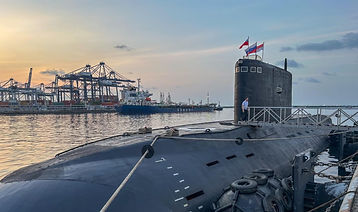
The article argues that the proposed sea-launched cruise missile–nuclear (SLCM-N) is essential to maintaining allied udeterrence in the Indo-Pacific and Euro-Atlantic theatres. The article proposes three options for deployment of the SLCM-N on Virginia-class submarines under AUKUS. It concludes that nuclear-capable arrangements best preserve flexible deterrence and are central to escalation management and conflict prevention in an increasingly unstable nuclear environment.

The U.S. lacks military readiness to deter conflict with China over Taiwan. While its Asia-Pacific forces are strong, logistical challenges hinder effective deterrence against a PRC attack. Instead, credible deterrence might be better achieved through the threat of theatre-nuclear weapons, such as the SLCM-N, positioned in the region.

China’s rise brings significant opportunities as well as an expanding role in promoting global governance. By aligning national development goals with broader global responsibilities, exercising prudence, and championing multilateral cooperation, China can play a pivotal role in strengthening international stability and advancing shared prosperity.

An integrated Indo-Pacific nuclear alignment could close the growing deterrence gap more quickly than conventional rearmament by delivering faster strategic effect and credibility in an increasingly unstable multi-nuclear environment.
This urgency is driven by China’s rapid multi-domain military modernisation, which is outpacing regional conventional force expansion, alongside North Korea and Russia’s nuclear signalling that compresses decision-making time and heightens escalation risks.
As a result, traditional approaches—expanding ships, missiles, aircraft, and bases—are increasingly too slow and structurally insufficient against a peer competitor with nuclear backing.

The piece examines how emerging Russian and Chinese conventional capabilities are increasingly being used to target nuclear command, control, and communications (NC3) systems in Australia, and the implications this has for the credibility of U.S. extended deterrence in the Indo-Pacific. It also offers a set of policy recommendations focused on strengthening deterrence resilience, alliance integration, and regional strategic stability.
An Indo-Pacific nuclear alliance would require forward deployment and hosting arrangements across the region. Australia, Japan, and South Korea could host a range of nuclear capabilities designed to provide flexible deterrent options across multiple contingencies.
If Australia, Japan, and South Korea each possessed sovereign nuclear capabilities, adversaries would face a far more complex strategic calculus. Rather than confronting a single decision-maker in Washington, they would need to account for multiple independent governments capable of responding to aggression.

Strategic competition in the Indo-Pacific increasingly occurs in the grey zone, the space between routine statecraft and open armed conflict. China, North Korea, Russia, and Iran employ a range of coercive tactics designed to alter the strategic environment without triggering a conventional military response. These activities include cyber operations, maritime harassment, disinformation campaigns, economic coercion, and limited military provocations. Because these actions remain deliberately below the threshold of war, they often exploit the reluctance of states to respond with force. As grey zone competition intensifies, the question confronting policymakers is not only how to deter such activities, but also how to ensure that responses to them are credible. In this context, a nuclear alliance could serve as the ultimate strategic backstop for military responses to persistent grey zone coercion.

Both Israel’s and Ukraine’s special operations are likely to offer valuable insights for covert missions targeting air power. However, their influence on deterrence and long-term strategic stability must be assessed within a broader and continuous deterrence framework. A diminished Iran might become increasingly resolute in its nuclear aspirations to re-establish deterrence, while a humiliated Russia may be inclined to resort to nuclear weapons.

The article suggests enhancing the U.S. Golden Dome missile defense by integrating with AUKUS Pillar 2, the trilateral tech cooperation among Australia, the UK, and the U.S. This integration would improve burden-sharing, strengthen collective deterrence, and create a more resilient defense system than one solely on the U.S. Contributions from allies in advanced technologies are essential a strong joint defense network.

